Van Gogh collection

Van Gogh at the Musée d'Orsay: the finest collection in France

Two dozen canvases, most painted in the last four years of his life: the self-portrait on its turquoise ground, Starry Night Over the Rhône, the church at Auvers. Here's where to find them, in what order to see them, and the story behind each one.

Independent guide site — learn more
Key canvases
Self-Portrait · Starry Night · Church at Auvers
Where
Françoise Cachin gallery, middle level
Suggested time
30–45 min
Access
Included in the entry ticket

Available tickets & tours

Compare entry tickets, guided tours and combo deals offered by Tiqets, an authorized reseller — free cancellation on most options.

Orsay's Van Goghs, canvas by canvas

The museum holds around 24 Van Gogh paintings — the largest collection in France, and one of the three most important in the world alongside Amsterdam and Otterlo.

WorkYearWorth knowing
Self-Portrait (Portrait de l'artiste)1889Among his very last self-portraits: a swirling turquoise ground and a gaze that follows you — painted at Saint-Rémy between two breakdowns
Starry Night Over the Rhône1888Arles, gaslights and the Big Dipper; not to be confused with the Starry Night at MoMA
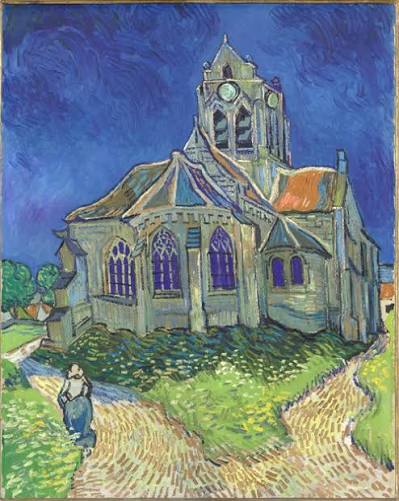
The Church at Auvers-sur-Oise1890Painted six weeks before his death; the ultramarine sky foreshadows Expressionism
Van Gogh's Bedroom in Arles1889The Orsay version (three exist): the "yellow house" dreamed of as a refuge
Doctor Paul Gachet1890The melancholy physician of his final days, elbow resting by the foxglove
The Siesta (after Millet)1889–1890A tribute to the peasant-painting master Van Gogh copied in the asylum — Millet hangs two floors below
The Italian Woman1887Paris period: pure colors laid on in hatched strokes — a gift to Fauvism before its time
🎨 Useful bearing: unlike the Monets, the Van Goghs are not on the fifth floor but in the Françoise Cachin gallery (middle level), with Gauguin and the Pont-Aven school. Plenty of visitors look on the wrong floor and miss the room entirely.

Seeing Van Gogh without the crush

The Van Gogh room is the busiest in the museum after the clock: tour groups file through from 10:30 AM to 4 PM. Three strategies work:

  • At opening: make it your second stop, right after the Monets on the fifth floor — you'll arrive around 10:15 AM, ahead of the groups;
  • After 4:30 PM: the groups have gone, leaving an hour of relative calm;
  • Thursday evening: after 7 PM you'll sometimes have the self-portrait to yourself — the closest thing to a private visit for €12.

In front of the self-portrait, take a moment to step to one side: the swirls in the background circle the head like a magnetic field. It was painted in the asylum, without a model, using a mirror.

Carry on with the museum's other masterpieces or head back up to Monet to measure the gulf between Impressionism and Post-Impressionism.
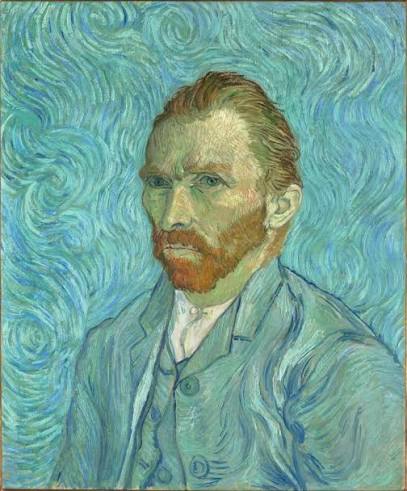
Self-Portrait by Vincent van Gogh (1889), Musée d'Orsay
Self-Portrait (1889) — the most photographed gaze in the museum.

Why these canvases matter

The Church at Auvers-sur-Oise by Vincent van Gogh (1890), Musée d'Orsay
The Church at Auvers-sur-Oise (1890), painted six weeks before the artist's death.

Van Gogh sold a single painting in his lifetime. Ten years of work, and most of what you'll see here comes from just four of them — Paris (1886–1888), Arles, Saint-Rémy, Auvers-sur-Oise. The Orsay room reads like a diary: the nervous hatching of the Paris period, the solar yellows of Arles, the swirls of the asylum, the dramatic ultramarine of Auvers.

Starry Night Over the Rhône deserves a long pause: Van Gogh painted it on the riverbank at Arles in September 1888 — he wrote to his brother Theo that the night was "richer in color than the day". The gaslight reflections in the water are laid on in pure, unmixed touches.

Auvers-sur-Oise, where he is buried, is an hour by train from Gare Saint-Lazare — a natural pilgrimage after Orsay, and the church in the painting still stands unchanged. Our Gare Saint-Lazare page puts you on the right track.

Ready for Orsay?

Since March 2026, booking a timed entry slot is mandatory. Reserve your entry in advance and simply show up with your mobile ticket.

Book my tickets

Frequently asked questions

How many Van Gogh paintings are at the Musée d'Orsay?

Around 24 paintings — the largest collection in France. The hanging varies with loans and exhibitions, but the 1889 self-portrait, Starry Night Over the Rhône and The Church at Auvers are almost always on view.

Is The Starry Night at the Musée d'Orsay?

Orsay shows Starry Night Over the Rhône (1888), painted at Arles. The better-known Starry Night with the cypresses (1889) is at MoMA in New York. Two different paintings, one sky of genius.

Where is the Van Gogh room in the museum?

In the Françoise Cachin gallery, on the museum's middle level — not on the fifth floor with the Impressionists. Follow the "Van Gogh / Gauguin" signs from the nave.

Do I need a specific ticket for Van Gogh?

No. The standard entry ticket covers the permanent collection, Van Gogh included. During certain major Van Gogh temporary exhibitions, a dedicated slot may be advisable — the ticket includes access, subject to capacity.

Did Van Gogh live in Paris?

Yes, for two years (1886–1888), with his brother Theo on Rue Lepic in Montmartre. That's where he discovered Impressionism and brightened his palette — the Orsay room shows this turning point clearly, between the dark Dutch canvases and the colors of Arles.

Can you visit Auvers-sur-Oise after Orsay?

Easily: take a train from Gare Saint-Lazare or Gare du Nord (about 1 hour, possibly with a change). The church from the painting, the Auberge Ravoux and the graves of Vincent and Theo can all be visited freely. Ideal as a half-day trip the next morning.